
 Ethan Cole

For those venturing outdoors, a manual timepiece can serve as a reliable guide to locate cardinal points. Hold the timepiece horizontally with the hour hand directed towards the sun. The angle between the hour hand and the 12 o’clock mark can then be utilized to discern geographical orientation.
Next, pinpoint the midway point between the hour hand and the 12 o’clock marker. This reference signifies true north if you’re situated in the Northern Hemisphere. Exit southward by simply reversing your direction from this point. In contrast, for adventurers in the Southern Hemisphere, aim to find the position of the sun relative to the clock hands to determine the same.
Exposure to sunlight is advantageous; ensure the method is employed during daylight hours for maximum reliability. This technique is an uncomplicated yet useful asset in the absence of modern navigation tools.


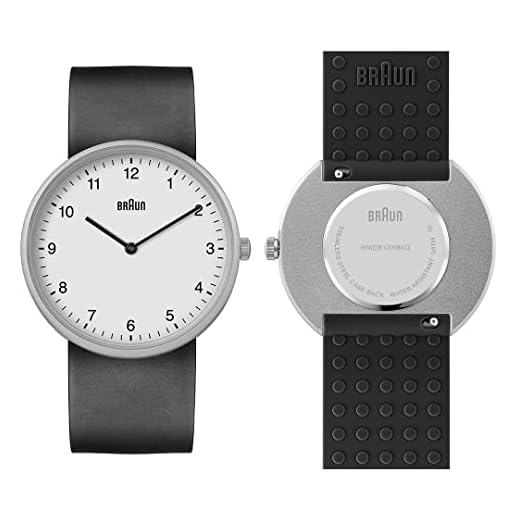
Selecting the Right Type of Timepiece for Navigation
Opt for an analog model with a clearly marked hour and minute hand. A timepiece featuring a clean dial enhances visibility and accuracy, which is crucial during orientation tasks.
A watch with a durable and weather-resistant case is advisable. Look for materials like stainless steel or titanium that can withstand different environmental conditions while maintaining functionality.
Consider a timepiece with luminous markers. This feature allows for visibility in low-light situations, ensuring reliability during early mornings or evenings.
Select a model with a rotating bezel. This can assist in aligning the hour hand with the sun, facilitating compass-like functions.
A timepiece with additional features, like barometric altitude and temperature readings, may be beneficial for outdoor expeditions. These serve as supplementary tools for orientation and environmental awareness.
Lastly, ensure your choice fits comfortably on the wrist. A well-fitted device prevents distraction and maintains focus on navigation tasks.
Understanding the Hour Hand Mechanics
The hour hand of your timepiece serves as a crucial element in determining directions, particularly in conjunction with the position of the sun. To make accurate calculations, it’s essential to grasp the mechanics of how this hand operates. Typically, the hour hand completes one full rotation every 12 hours, moving at a rate of 30 degrees per hour. This means that every minute, it shifts by 0.5 degrees.
Angle Calculation
To estimate the sun’s position, start with the current time displayed. Convert the hour into degrees by multiplying it by 30. For example, at 3:00 PM, the hour hand points at 90 degrees (3 x 30). Correct this by adding half a degree for each minute past the hour mark. This precision allows for refined adjustments when estimating angles accurately.
Shadow Method
When natural light sources are available, utilize the shadow cast by the hour hand. Position your timepiece horizontally, aligning the hour hand with the sunlight. The shadow created by the 12 o’clock mark indicates the direction opposite to the sun’s rays. This method enhances your directional accuracy, especially during daylight hours.
Determining the Position of the Sun in the Sky
To accurately ascertain the sun’s position, observe its path throughout the day. At noon, the sun reaches its highest point in the sky, directly south in the Northern Hemisphere and directly north in the Southern Hemisphere.
Sun Movement by Seasons
- In summer, the sun rises northeast, reaching its zenith in the southeast before setting northwest.
- In winter, it rises southeast, achieving its peak in the southwest, then sets southwest.
- During equinoxes, the sun rises due east and sets due west, maintaining a consistent path across the sky.
Positioning with Shadows
Utilize shadows to further determine the sun’s location. Place a stick or any straight object vertically into the ground; the shadow will indicate the sun’s direction:
- As the sun moves, the shadow will rotate, indicating east in the morning and west in the evening.
- Measure the length and direction of the shadow for more precise positioning.
Applying these observations effectively will enhance navigation capabilities using horological tools.
Calculating the Angle Between Hour Hand and Twelve O’Clock
To determine the angle between the hour hand and twelve o’clock, use this formula: angle = |(30 * hour – 5.5 * minutes)|. This will provide the angle in degrees. Adjust for 12-hour format, ensuring that values for hour do not exceed 12.
The hour hand moves 30 degrees for each hour (360 degrees/12 hours) and 0.5 degrees for each minute (30 degrees/60 minutes). For instance, at 3:15, the calculation appears as follows: angle = |(30 * 3 – 5.5 * 15)|, resulting in an angle of 52.5 degrees.
Additionally, confirm that the result stays within the range of 0 to 180 degrees, as angles above 180 can be simplified by subtracting from 360. This adjustment enables easier interpretation in navigation tasks.
Identifying the south direction using the watch’s face
To pinpoint the direction toward the cardinal point of interest, position the hour hand such that it points directly at the sun. This orientation establishes a line that can be used for further calculations.
Calculating the angle
Once the hour hand is aligned with sunlight, measure the angle between it and the twelve o’clock marker. In the northern hemisphere, the resulting angle can be halved to determine the approximate south direction. For instance, if the hour hand is at 3 o’clock, the angle is 90 degrees, making the bisected line towards 135 degrees, implying a southward inclination.
Adjustments for local time
Be aware of the necessity to adjust for standard time versus daylight saving time for accurate readings. Add one hour for daylight saving adjustments while making calculations to ensure precision.
| Hour Hand Position | Calculated South Direction |
|---|---|
| 1:00 | 165° |
| 2:00 | 150° |
| 3:00 | 135° |
| 4:00 | 120° |
| 5:00 | 105° |
Regular practice in applying these techniques will enhance accuracy and confidence in directional identification.
Practical tips for using a watch in different geographical locations
Consider your location before relying on a timepiece for orientation:
- Equatorial Regions: Shadows are shorter, and the sun rises and sets nearly vertically. Adjust time calculations accordingly.
- Tropics: The sun shifts closer to the zenith. Observe midday when shadows point directly north or south based on local solar noon.
- Mid-Latitudes: Utilize the timepiece’s hour hand method during daylight saving time; subtract an hour when appropriate to align with solar noon.
- Polar Areas: In summer, the sun doesn’t set; use timepiece adjustments to calculate the sun’s position relative to your location’s latitude.
- High Altitudes: Atmospheric conditions can affect sun visibility. Ensure you account for cloud cover in calculations. Adjust usage based on visibility conditions.
For mountainous terrain, observe landmarks and consider their angles relative to the sun for more accuracy.
If in unfamiliar territories, it’s advisable to double-check natural navigational aids like stars or mountains to validate the heading suggested by the time instrument.
FAQ:
How can I determine south using a wristwatch?
To find south using a wristwatch, you can use the position of the hour hand and the angle of the sun. First, hold your watch horizontally so that the hour hand points directly at the sun. Then, imagine an imaginary line that runs halfway between the hour hand and the 12 o’clock mark on the watch; this line will point towards the south. For instance, if it’s 3 PM, the imaginary line would be at a 45-degree angle between the hour hand (pointing at 3) and 12. Make sure to account for daylight saving time, adjusting the 12 o’clock position accordingly.
Do I need a specific type of watch to find south?
No, you do not need a specific type of watch to find south. Any standard analogue wristwatch will work for this method. The critical factor is that it has an hour hand and a clear indication of the 12 o’clock position. Digital watches will not work for this technique because they do not have hour hands. If you have an analogue watch, you can effectively use it to approximate the south direction based on the sun’s position during daylight hours.
Is this method accurate in all locations?
This method is generally accurate when you are in the northern hemisphere; however, there are some caveats. In the southern hemisphere, the method still works, but the points might shift slightly due to the sun’s path across the sky. Other factors such as time of year, the time of day, and your geographical location can also influence accuracy. As a rule of thumb, this technique works best during the middle of the day when the sun is higher in the sky, as it reduces the likelihood of shadows affecting the direction.
What should I do if it’s cloudy and I can’t see the sun?
If it’s cloudy and the sun isn’t visible, determining south with a wristwatch can be challenging. In such cases, consider other methods for navigation, such as using a compass if you have one. Alternatively, if you have a reliable map or GPS device, you can use those to orient yourself in the right direction. If you don’t have access to those tools, try to wait for a break in the clouds to use the watch method effectively, or look for other landmarks that can help guide you.



