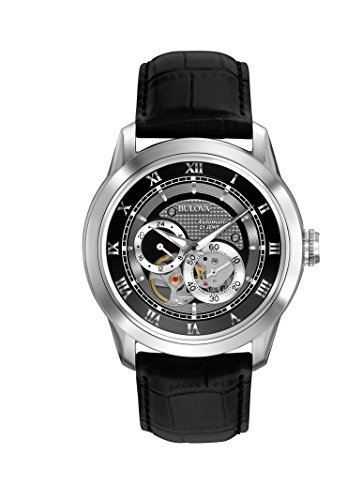
Ethan Cole

Point the hour hand towards the sun; this simple method can help you establish your position. If it’s daytime, the angle between the hour hand and the 12 o’clock mark offers a clear indicator of North. For instance, during summer months, when you position your hour hand at 3 PM, the North lies roughly halfway between the hour hand and 12.
In instances when the sun isn’t visible, particularly at dusk or in overcast conditions, you can still rely on your timekeeping device. Note the current time and convert it to a 12-hour format. For example, at 4 PM, the hour hand points to four. If you have access to a compass app, use it as a complementary tool to verify your orientation during cloudy weather.


Making use of this technique is especially useful for outdoor enthusiasts. An awareness of your surroundings helps in risk management during hikes or when exploring unfamiliar areas. By integrating this method into your skill set, you can foster a greater sense of security while traversing various terrains.
Determining Location with a Timepiece
Align the hour hand with the sun. Mark the angle between the hour hand and the 12 o’clock mark. In the Northern Hemisphere, the midpoint of that angle points south. Conversely, in the Southern Hemisphere, the midpoint indicates north.
Adjustments for Daylight Saving
During Daylight Saving Time, account for the clock being one hour ahead. When taking measurements outside this period, the same method applies but requires a slight adjustment in angle perception due to the clock’s advancement.
Consideration of Time Zones
Be aware of your local time zone. When applying this technique in a region with significant time differences, recalibrate your reading based on the appropriate time zone to ensure accuracy in orientation.
Understanding the Basic Mechanism of a Traditional Timepiece
The functionality of a classic timepiece relies on several crucial components. Each part plays a role in the seamless operation, allowing users to read time efficiently. Key elements include the movement, gears, and hands.
Core Components
- Movement: The heart of the timepiece, which can be either mechanical or quartz. Mechanical movements typically consist of a series of gears driven by a mainspring, while quartz movements use a battery and a quartz crystal to maintain accurate time.
- Gears: These circular components transmit energy from the mainspring (in mechanical models) or the battery (in quartz models) to the hands, enabling them to move at a precise rate.
- Hands: The hour, minute, and second hands indicate time progression. Each hand is calibrated to rotate at a specific angle per minute or hour.
Operating Mechanism
In mechanical timepieces, energy stored in the mainspring is released gradually through the gear train. This process rotates the hands in a consistent manner. In contrast, quartz timepieces operate through electrical impulses emitted by the quartz crystal, ensuring higher accuracy and less maintenance.
Understanding these components enhances your appreciation of traditional timekeeping, making it easier to utilize these devices effectively. By familiarizing oneself with the internal workings, one can better understand how to maximize functionality in various scenarios, including orientation tasks.
Identifying Cardinal Directions with Hour and Minute Hands
To identify north, place the hour hand on the current hour and adjust for the angle based on your location’s latitude. For example, in the Northern Hemisphere, if it’s 2 PM, count two hours clockwise from the 12 o’clock position. Then, bisect the angle between the hour hand and the minute hand to find the north-south line.
Consider the minute hand’s position. At 30 minutes past the hour, the minute hand points directly downward. If the hour is not whole, estimate the angle of the minute hand to further refine your reading. For instance, at 2:15, an estimation places the bisector between the minute and hour hands slightly toward the south-east.
In the Southern Hemisphere, the process is similar but reversed. If it is 3 PM, the hour hand points towards the west. Use the same method to bisect the angle for accurate alignment with cardinal points.
Adjust for seasonal variations; during summer months, the sun is positioned differently in relation to time markers on the dial. Use these principles to enhance your skills in determining your geographical alignment with minimal tools.
Adjusting for Time Zones and Daylight Saving Time
To accurately utilize a timepiece for geographical orientation, it is necessary to factor in local time variations. Time zones can shift standard references by a few hours, impacting readings based on the watch’s hour hand.
Account for Time Zone Differences
Identify your current time zone and the time zone corresponding with the standard time of your location. Here’s an approach:
- Determine the current local time.
- Find the time difference from UTC (Coordinated Universal Time), often displayed on world maps.
- Adjust the hour hand to reflect this difference. For example, if you are in UTC+2, proceed two hours ahead of the watch’s base time for correct orientation.
Adjust for Daylight Saving Time (DST)
If your region observes DST, remember it typically advances clocks by one hour during summer months. To apply this:
- Check if DST is in effect in your location.
- Add an extra hour to your local time when setting the watch.
- Ensure this adjustment is considered every year, as the dates for the start and end of DST can vary.
By implementing these adjustments, you can maintain accuracy in your timepiece’s hand positions, maximizing its utility in finding your bearings.
Using a Watch in Different Hemispheres: Northern vs. Southern
In the Northern Hemisphere, align the hour hand with the sun. The midpoint between the hour hand and the 12 o’clock mark indicates south. For example, at 3 PM, the angle between the hour hand and 12 is 90 degrees, with the south direction lying at 45 degrees to the right.
In the Southern Hemisphere, the process is reversed. Point the hour hand towards the sun, and the midpoint between the hour hand and 12 indicates north. For instance, at 2 PM, the south will be at the 2 and north will be at the 8 on the dial, requiring adjustment for seasonal changes.
Seasonal Adjustments
Seasonal changes in the sun’s position affect accuracy. During summer, the sun is positioned higher in the sky, resulting in a lower angle for shadow casting. In winter, the sun is lower, creating a sharper angle. Consider the season when determining orientations.
Table of Time Corrections
| Hemisphere | Time of Day | Adjustment |
|---|---|---|
| Northern | Morning | Hour hand at noon for south |
| Northern | Afternoon | Midpoint to south |
| Southern | Morning | Midpoint to north |
| Southern | Afternoon | Hour hand at noon for north |
Practical Tips for Accurate Direction Finding in Various Settings
To enhance accuracy in determining orientation, apply a local landmark reference point for calibration. Align your timepiece with the sun’s position. In clear weather, the sun serves as a reliable guide, especially around noon when it’s at its zenith. Adjust your method according to the shadow cast by the hour hand or the 12 o’clock mark.
Consider reflective surfaces or nearby bright objects to track sun movements if the sky is partially obscured. This technique can clarify the exact angle of sunlight and improve results in shaded areas.
In dense forests or urban environments, utilize taller structures or trees as additional reference markers. Establish bearing lines from these points to ensure more reliable readings when natural light is limited.
During twilight or poor visibility conditions, illuminate your timepiece with a flashlight. This can help in observing the hour and minute hands distinctly, allowing for accurate readings even in low light.
For mountainous terrains, observe the sun’s position relative to peaks. This helps confirm approximate cardinal orientations, as elevations often shift shadows unpredictably. Maintain awareness of how terrain can distort angles.
Regularly practice with these techniques in various settings. Familiarity will improve speed and precision in real situations where conventional methods may not be feasible. Each environment presents unique challenges, making adaptability crucial.