
 Ethan Cole

The bright face of your timekeeper hosts a range of gears, designed to keep you informed. Familiarize yourself with the prominent markers, usually numbered from one to twelve, displaying hours. The shorter hand signifies the hour, while the longer hand indicates the minutes. Knowing this distinction is fundamental for efficient reading.
Recognize that many models include a second hand, typically a slender pointer that moves smoothly or ticks at set intervals. This feature provides precise tracking of each passing second, assisting in activities like timing events or monitoring specific durations.
For those with analog devices, mastering the divisions on the dial is crucial. Each numeral corresponds to a five-minute interval; thus, interpolating between those markers is essential. Practice estimating intervals, ensuring swift reading when it matters most.
Consider the presence of additional functionalities, such as chronographs or tachymeters. These features enhance the capability of your device, allowing you to measure time over longer durations or calculate speed based on distance. Understanding their operation adds versatility to your skillset.
Understanding the Mechanics of a Timepiece
To accurately gauge the hours and minutes using a classic timepiece, first locate the hour hand and minute hand. The shorter hand indicates the current hour, while the longer hand signals the minutes. Each hour on the dial typically represents a 60-minute segment, meaning every tick of the minute hand corresponds to one minute elapsed.
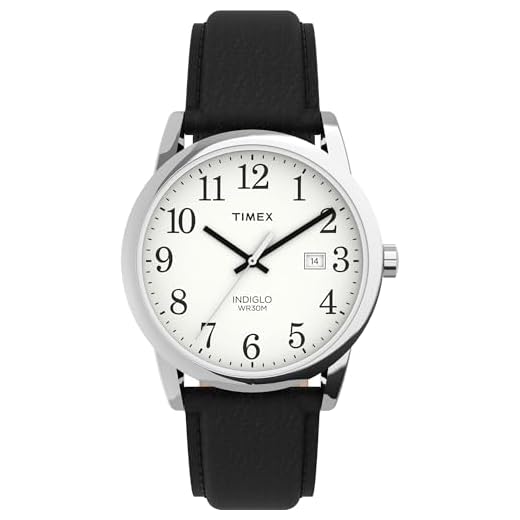

Reading the Dial
Focus on the position of the minute hand in relation to the hour hand. If the minute hand is pointing at the 3, this indicates 15 minutes past the hour. Know that the full rotation of the minute hand around the dial signifies one complete hour, divided into five-minute intervals. For precision, observe the markings between the hour markers, which denote additional minutes.
Utilizing a Sub-Dial
If equipped, utilize sub-dials indicating seconds or alternative complications. The small hand on a sub-dial might reveal the seconds elapsed, allowing for a more precise reading of the passing moments. This feature can enhance timing accuracy for various activities.
Understanding the Analog Watch Face
To read an analog instrument, focus on the hour and minute markers. The standard face includes numbers from 1 to 12, representing hours, and longer lines or ticks indicating increments of five minutes.
Hour and Minute Hands
The shorter hand signifies hours, while the longer hand indicates minutes. Observe their positions accordingly:
- If the hour hand is between two numbers, it represents the hour just past the lower number.
- The minute hand points directly to the minute markers, with each number on the face standing for five-minute intervals.
Understanding Additional Features
Some designs feature a second hand, typically slimmer and moving continuously. For precise calculations, note its movement as follows:
- Each complete revolution of the second hand represents a full minute.
- When the second hand aligns with one of the minute markers, count the minute increment based on the position of the minute hand.
Additional complications, such as date displays or chronographs, provide further information but do not interfere with basic understanding. Familiarity with your specific model will aid in more precise usage.
Reading the Hour and Minute Hands
Focus on the two main indicators: the hour hand and the minute hand. Each hand has a distinct function in conveying the current moment.
The hour hand is typically shorter and moves at a slower pace. It completes one full rotation every twelve hours. To determine the hour, observe the position of the hour hand relative to the numbered markers. If the hand is pointing directly at a number, it indicates the exact hour. If it’s between two numbers, the hour is the lower number.
The minute hand is longer and moves more quickly, completing a full cycle every sixty minutes. Each mark between the numbers represents one minute. To identify the minutes, count the number of marks the minute hand has passed since the last hour, starting from 12. For instance, if it points at the 3, that’s 15 minutes past the hour.
- When combining both indicators, read the hour from the hour hand and the minutes from the minute hand.
- If the minute hand is on or past the 6, it indicates a higher number of minutes closer to the next hour.
For precise readings, it may be helpful to keep in mind that each hour marker corresponds to 5-minute intervals. Thus, counting marks can enhance reading accuracy.
Practice makes perfect; frequent checks will improve speed and confidence in interpreting the analog display.
Using the Second Hand for Precision
The second hand is a valuable tool for accurate measurements. Observing this hand enables users to note fractions of a minute, which is particularly useful in competitive and professional scenarios.
To utilize the second hand effectively, focus on its position at the beginning of each minute. For instance, when the second hand points at the 12, exactly 0 seconds have passed. If the hand is at the 30, it indicates 30 seconds. This precise reading assists in synchronization and timing tasks.
In situations requiring detailed timing, such as cooking or sports, counting the movements of the second hand can enhance precision. For example, if the second hand moves 2 ticks for every second, you can track intervals accurately by counting ticks rather than relying solely on the minute hand.
Moreover, many analog timepieces feature markers for every five seconds. This subdivision allows for even greater accuracy. A glance at this scale can help determine exact positions within each five-second segment, critical for timing events or activities.
Practicing consistently will improve one’s ability to read the second hand swiftly, enhancing overall proficiency in using analog models. Utilize this technique to gain an edge in scenarios that demand exactitude.
Identifying AM and PM on Your Watch
Many timepieces lack a dedicated indicator for AM or PM. To discern between these periods, focus on the hour hand’s position. If it points to 1 through 11, the reading is likely in the morning unless you are dealing with a 24-hour format. For instance, 10:30 indicates a morning hour.
In cases where the hour hand points to 12, check for additional clues. A small mark or a secondary dial may indicate AM or PM. If available, utilize the watch’s digital display; many models switch formats automatically.
During long-duration events, track external cues, like daylight or darkness. Morning hours are illuminated, while evening hours tend to be darker. For scenarios where uncertainty persists, a supplementary digital device or smartphone can serve as an accurate reference.
Adjusting Your Watch for Accuracy
Sync your timepiece to a reliable source, such as an atomic clock or a trusted smartphone app, to ensure precision. Check the current time in your time zone and adjust the hour and minute hands accordingly. For quartz models, use the crown to set the time accurately, ensuring both hands are positioned correctly without any overlap.
Regularly monitor the performance of your mechanism, especially if it is mechanical. If there are discrepancies over a period of several days, consider having it serviced by a professional technician to identify potential issues.
Be aware of environmental factors that can influence accuracy. Extreme temperatures, magnetic fields, and physical shocks can affect your timepiece’s performance. Store it in a safe, stable environment to maintain its functionality.
Keep track of any daylight saving adjustments. Make necessary changes once the seasonal shift occurs to maintain correct settings. Review the watch’s manual for specific instructions tailored to your model.
Lastly, periodic battery replacements for quartz types can prevent time drift. If you notice inconsistent readings, replace the battery to restore optimal functioning.
Maintaining Your Wrist Watch for Longevity
Regular cleaning is essential for optimal performance. Use a soft microfiber cloth to gently wipe the surface and remove any dirt or fingerprints. Avoid abrasive materials that could scratch the glass or casing.
Water resistance does not mean waterproof. If your accessory is water-resistant, remember to check its limits. After exposure to water, dry it thoroughly and ensure all seals are intact to prevent moisture damage.
Battery replacement is necessary for quartz models. Schedule this maintenance every couple of years to avoid leakage issues. Always have batteries replaced at authorized service centers to maintain the warranty and integrity of the piece.
Mechanical types require occasional winding. For automatic models, wearing them regularly keeps the movement lubricated. If not worn, consider a watch winder to maintain energy and prevent the lubricants from settling.
Store your timepiece properly when not in use. Use a padded case or box, avoiding direct sunlight and extreme temperatures. This helps prevent damage to both the exterior and internal mechanisms.
Routine servicing every 3 to 5 years by a professional technician ensures that all parts function smoothly. This includes cleaning the movement and replacing worn components.
| Maintenance Task | Frequency |
|---|---|
| Cleaning | Monthly |
| Battery Replacement | Every 2-3 years |
| Mechanical Winding | Daily if worn |
| Professional Servicing | Every 3-5 years |


